
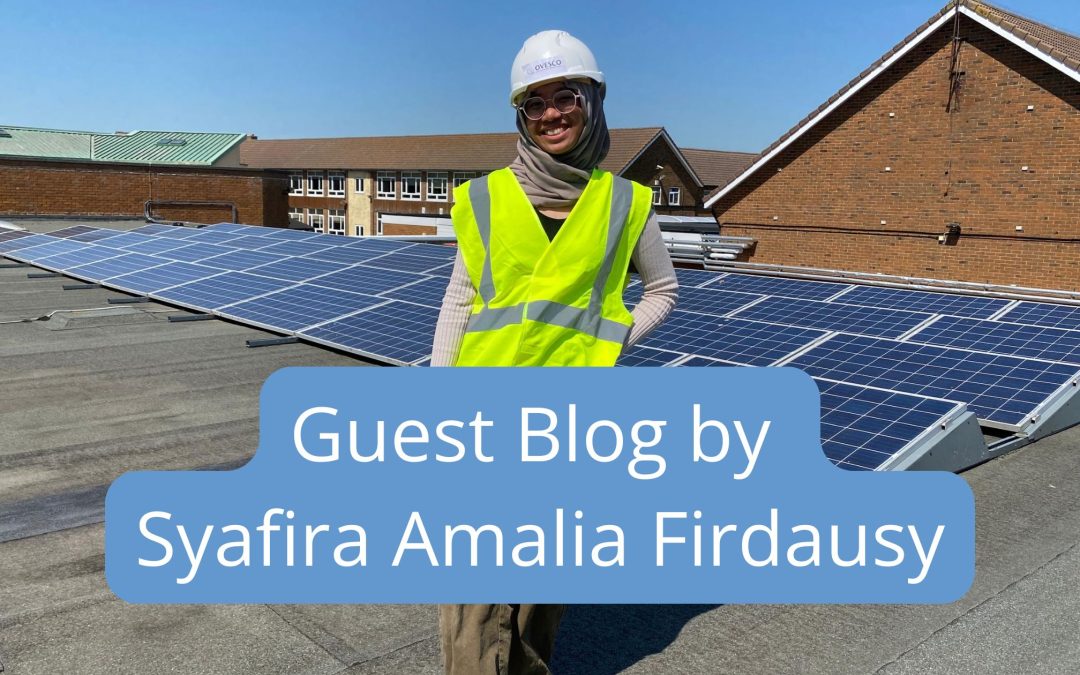
We’re delighted to introduce Syafira, our summer intern from the University of Sussex, who has been getting stuck in with our communications and research. Fresh eyes often notice things we take for granted, and Syafira’s first visit to one of our school solar projects was no exception. Over to her.
Guest Blog by Syafira Amalia Firdausy
“Humanities students can’t enter the green industry. You need a STEM degree.”
For a long time, I believed that.
I was interested in renewable energy, but I struggled to see where someone with a marketing and communications background would fit. That changed when I secured a summer internship through the University of Sussex with OVESCO, supporting renewable energy research and communications.
One of my first experiences was visiting a school solar installation project.
Up On The Roof
It was a hot day in May. Before heading up to the roof, Chris, OVESCO’s Director & CEO, handed out high-visibility vests and hard hats while running through the safety briefing.
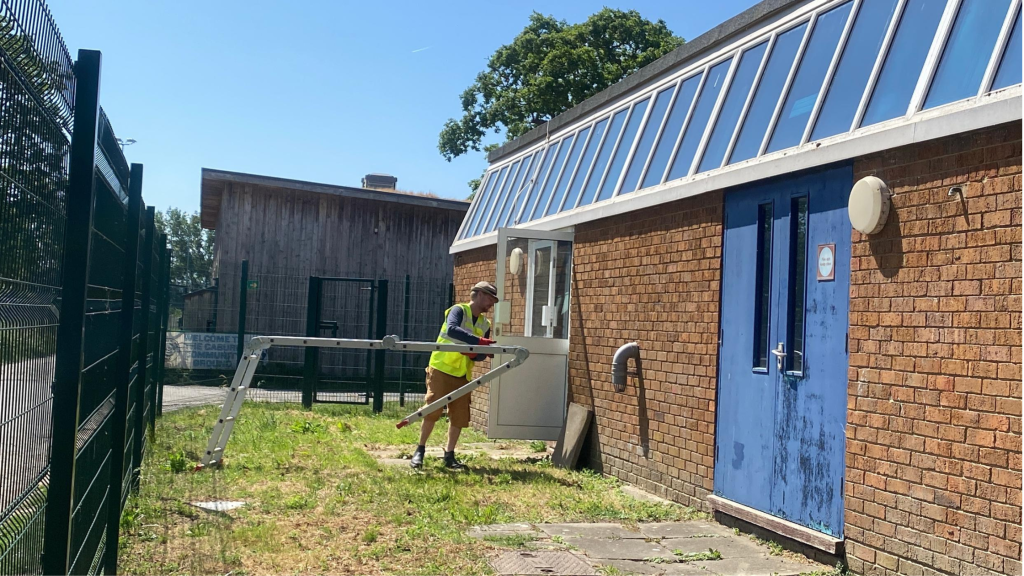
“Don’t walk on the skylights.” Chris explained, while pointing them out. “And don’t disturb any seagulls or their eggs.”
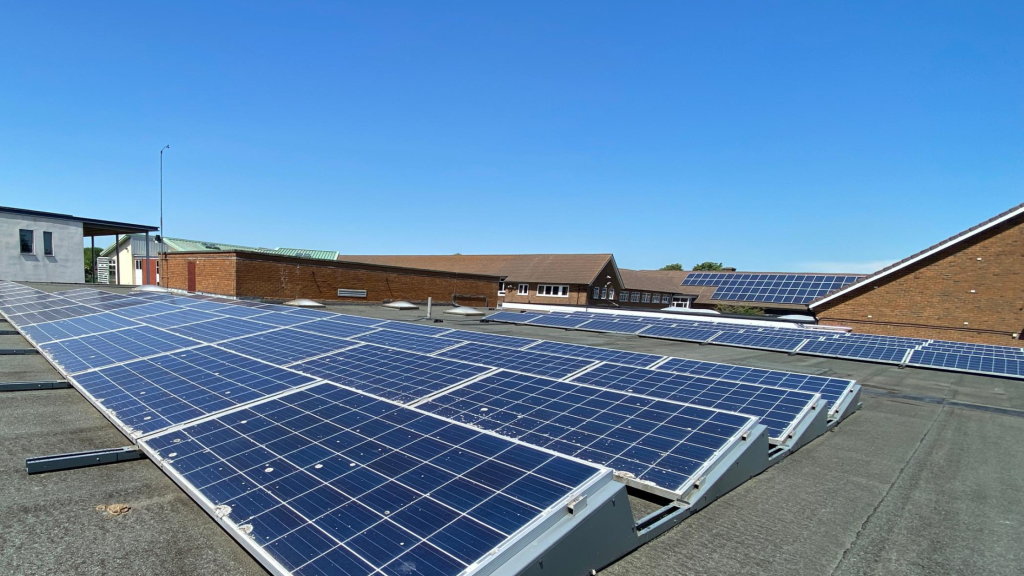
On the roof, rows of blue solar panels stretched across the flat surface. What surprised me most was how easy they were to miss. From the ground, they blended into the building, quietly generating electricity without drawing attention.
The school was unusually quiet as most students were away. I could hear The Entertainer playing somewhere outside while the installation team worked. I helped take photographs and observed the process closely. Until then, solar panels had mostly been something I read about. Seeing them up close made the technology feel much more real.
The experience made me realise how invisible clean energy can be in everyday life. We rarely think about where electricity comes from until something stops working.
Where Sunlight Becomes Numbers
Later, we visited the technical room where the system’s output was monitored. The room hummed with a steady buzzing sound, similar to a large fridge. Inverters and screens translated sunlight into numbers showing how much electricity was being generated and used.
Curious, I asked Frank how much the system produced.
“About 293,818 kWh per year,” he said.
To put that in perspective, it’s roughly equivalent to the annual electricity use of an entire neighbourhood of over 100 homes.
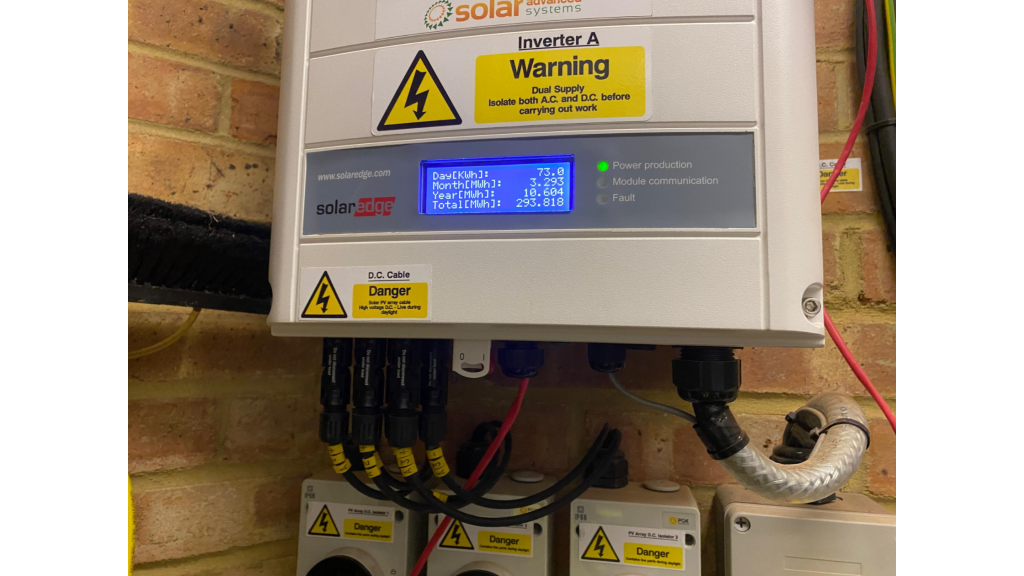
Seeing the figure made the scale of the project feel real. The panels had seemed invisible on the roof, yet they were producing a significant amount of electricity and helping to reduce the school’s energy bills year after year.
Standing there, I imagined the invisible journey of electricity through the building, connecting the roof to the classrooms below. It made something normally hidden feel tangible.
What struck me most was not just the technology, but its impact. The system reduces carbon emissions while also lowering energy costs for the school. That combination made renewable energy feel less like an abstract climate solution and more like something that delivers practical benefits to a community.
I don’t often see OVESCO’s community energy model in Indonesia. Solar projects there are more commonly treated as commercial services. Seeing a school benefit directly from locally generated energy made me rethink what energy systems can achieve.
In some rural areas in Indonesia, access to reliable electricity can still be a challenge, and food is often lost due to limited cold storage. This visit made me wonder how community-led renewable energy could support not just electricity needs, but also wider issues like food preservation and resilience.
Much like an editor in a film, OVESCO’s work often happens behind the scenes. Most people never see the planning, coordination, and technical effort required to make these projects possible, yet without it, nothing would function.
I believe access to reliable energy should be universal, regardless of income or background. This visit strengthened that belief.
What stayed with me most was how much happens behind the things we take for granted. The panels on the roof, the electricity flowing through the building, and the people maintaining the system were all largely invisible, yet they made a visible difference every day.
For me, that was the real lesson of the visit.
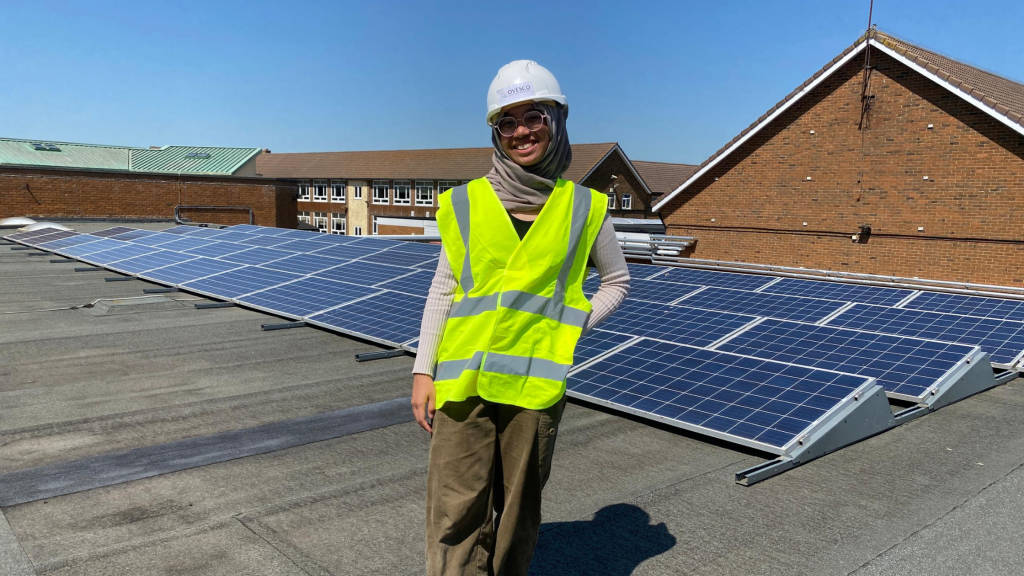
Syafira on the rooftop of King’s Academy Ringmer